

Powder supplements are often treated as the most forgiving format.
No encapsulation. No compression. No cooking. Just blending and filling.
That simplicity disappears quickly when formulas move toward high load. As active content increases, powder systems reveal a set of trade-offs that are easy to overlook during development and hard to correct after scale-up.
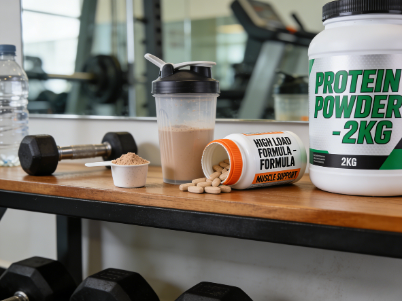
This article explores how high load powder supplements challenge both mixing performance and long-term stability—and why improving one often puts pressure on the other.
Why High Load Changes Powder Behavior
At moderate levels, powders behave predictably.
Flow remains manageable. Blends stay uniform. Stability risks remain contained.
High load shifts the balance. Actives dominate the blend, leaving fewer excipients to absorb variability. Particle interactions become more influential, and small differences in raw materials can affect the entire system.
Powders stop behaving like neutral carriers and start behaving like tightly coupled systems.
Mixing Uniformity Becomes Fragile
Uniformity is the first pressure point.
As active content increases:
-
Density differences become harder to compensate
-
Particle size mismatch becomes more impactful
-
Segregation risk increases during handling
A blend that looks uniform after mixing may separate during transfer, storage, or filling. High load formulas reduce tolerance for these movements, making uniformity harder to maintain consistently.
Stability Trade-Offs Emerge as Excipients Shrink
Excipients play a stabilizing role that is often invisible.
They buffer moisture, reduce reactivity, and improve flow. As high load formulas reduce excipient content, stability margins narrow.
This can lead to:
-
Increased moisture sensitivity
-
Faster oxidation or degradation
-
Greater batch-to-batch variation
Improving mixing by tightening particle size or reducing excipients may unintentionally weaken long-term stability.
Flowability and Filling Consistency Are Linked to Stability
Powders that flow well are easier to fill consistently.
Powders that remain stable often require tighter control of moisture and particle characteristics.
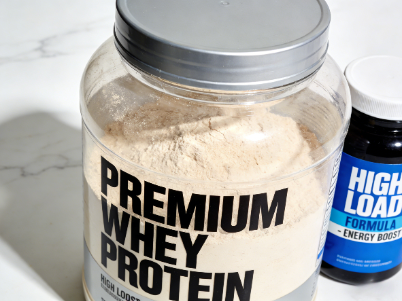
At high load, these goals may conflict. Improving flow with finer particles can increase surface area and accelerate degradation. Stabilizing with moisture control may reduce flowability.
Manufacturers must decide which compromise best supports the product’s lifecycle rather than optimizing a single parameter.
High Load Magnifies Raw Material Variability
Raw material variability exists in every supply chain.
At lower loads, excipients absorb much of this variation. At high load, variability becomes visible in blend behavior, flow, and stability.
Differences in particle size, hygroscopicity, or processing history that were previously negligible may now affect performance. This magnification effect is one reason why high load powder formulas often require tighter supplier qualification.
Storage and Handling Become Part of the Formula
High load powders are more sensitive to how they are stored and moved.
Repeated handling, vibration, or temperature changes can encourage segregation or moisture migration. What happens after blending can be as important as the blending itself.
Manufacturers evaluate not only how powders are mixed, but how they behave throughout storage, transport, and filling operations.
When High Load Powder Formulas Make Sense
High load powders can be effective when:
-
Ingredient systems are physically compatible
-
Particle characteristics are tightly controlled
-
Stability expectations are realistic
-
Supply chains are consistent
In these cases, powders offer flexibility and cost advantages without excessive compromise. Success depends on accepting narrower operating margins.
Why Moderate Load Often Wins Long Term
Many successful powder supplements settle below theoretical maximum load.
Moderate formulations:
-
Mix more reliably
-
Maintain stability more easily
-
Tolerate raw material variation
-
Scale with fewer adjustments
For long-term product lines, these advantages often outweigh the marketing appeal of extreme loading.
Balancing Mixing Performance and Stability
High load powder supplements are defined by trade-offs, not absolutes.
Designing within these constraints requires recognizing that improving one dimension often pressures another. The most durable formulations are those that balance mixing performance with stability rather than maximizing either in isolation.