

The supplement product development process rarely starts with a finished formula.
In practice, it begins with an idea that is only partially defined—an ingredient concept, a dosage target, or a product format inspired by market trends.
For many buyers, this early stage feels confusing. Questions around feasibility, cost, and timelines surface immediately, yet clear answers are hard to get. This is because manufacturers do not evaluate projects in a single step. They assess feasibility gradually, following a structured supplement product development process that buyers often do not see.
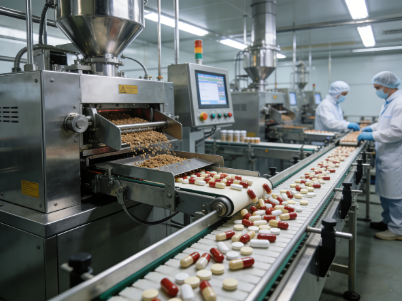
This article explains how the supplement product development process actually starts, and why understanding the early feasibility stage is critical for avoiding delays, rework, and unrealistic expectations.
What the Supplement Product Development Process Really Begins With
Despite common assumptions, the supplement product development process does not begin with formulation details.
Manufacturers first seek to understand product intent. Before evaluating ingredients or dosages, they clarify how the product is meant to function in the market. This includes its positioning, target users, and expected lifecycle.
At this stage of the supplement product development process, manufacturers typically focus on:
-
Intended dosage form (capsule, gummy, powder, liquid)
-
Target market and regions
-
Product positioning and use case
-
Expected production scale
Without this context, feasibility assessments remain speculative and often misleading.
Why the Supplement Product Development Process Feels Unclear to Buyers
Many buyers feel that early discussions with manufacturers are vague or non-committal.
This is a natural part of the supplement product development process. Manufacturers avoid giving definitive answers until the project is sufficiently defined. Early certainty without context often leads to incorrect assumptions that must be corrected later.
When key inputs are missing, manufacturers deliberately keep feasibility feedback open-ended to protect both sides from false expectations.
Feasibility as a Core Stage in the Supplement Product Development Process
Buyers often treat feasibility as a yes-or-no question.
Manufacturers treat it as a sequence.
Within the supplement product development process, feasibility emerges through multiple evaluations:
-
Dosage form compatibility
-
Ingredient behavior at intended strength
-
Stability across shelf life
-
Scalability beyond samples
Each step narrows the range of viable options. Feasibility is not determined instantly; it is shaped as information becomes clearer.
Why Manufacturers Request Information That Seems Unrelated
During the supplement product development process, manufacturers may request details that feel premature—such as packaging formats, volume expectations, or destination markets.
These factors directly influence feasibility. Packaging affects stability assumptions. Volume influences sourcing and process selection. Market regions affect regulatory and labeling constraints.
Providing this information early helps manufacturers align feasibility assessments with real-world conditions rather than idealized scenarios.
The Difference Between an Interesting Idea and a Feasible Project
Many supplement ideas are innovative.
Fewer are feasible at scale.
Within the supplement product development process, manufacturers distinguish between:
-
Concepts that can be produced once
-
Concepts that can be reproduced consistently
-
Concepts that can be sustained long term
Projects that rely on exceptional conditions or constant adjustment may pass early trials but struggle as they move through the development process.
Why Samples Are Not the True Start of the Supplement Product Development Process
Samples are often mistaken for the beginning of development.
In reality, samples appear after early feasibility alignment. When samples are produced too early, they can lock buyers into assumptions that later prove unsustainable.
In the supplement product development process, samples function as validation checkpoints—not as the foundation of feasibility.
How Experienced Buyers Navigate the Supplement Product Development Process
Experienced buyers approach the supplement product development process differently.
They focus on:
-
Clarifying product goals before fixing specifications
-
Discussing constraints openly during feasibility evaluation
-
Understanding how manufacturers internally assess risk
This approach reduces rework and shortens the path from idea to scalable production.
Moving Efficiently From Idea to Feasibility
The supplement product development process advances most smoothly when buyers:
-
Define objectives before technical details
-
Remain flexible during early evaluation
-
Treat feasibility as an alignment stage rather than a barrier
Manufacturers respond more decisively when they can see how a concept fits within existing production systems and long-term expectations.
Why the Early Supplement Product Development Process Shapes Everything That Follows
How a project begins determines how it unfolds.
Clear early alignment reduces downstream delays, simplifies quoting, and improves the accuracy of feasibility decisions. Projects that skip this alignment often encounter reformulation, extended timelines, or quiet redesigns later.
Understanding the supplement product development process from idea to feasibility gives buyers greater control and fewer surprises throughout development.