

It usually appears later—when a distributor enters the conversation, when a new market is added, or when a deal suddenly requires “one more document.”
Buyers searching halal certification supplements are not asking about definitions.
They are asking whether Halal will become a real barrier—or a real opportunity.
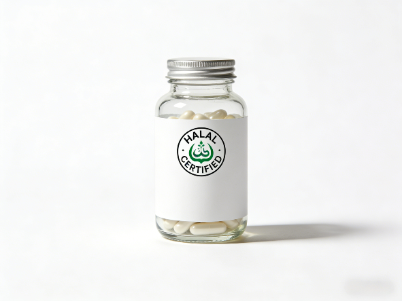
Understanding that difference early prevents costly rework later.
Market View: Halal Is About Access, Not Label Decoration
From a market perspective, Halal certification is not symbolic.
In many regions, it determines:
-
whether a product can be listed
-
whether distributors are willing to onboard
-
whether consumers will trust the brand
For buyers selling into Southeast Asia, the Middle East, or Muslim-majority regions, halal certification supplements is often a baseline expectation—not a premium feature.
Ignoring it can quietly limit market reach.
Compliance View: Halal Is Ingredient and Process Driven
Halal is not only about what is included.
It is about what is excluded—and how decisions are controlled.
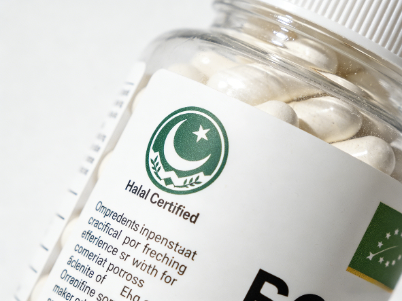
Compliance reviews focus on:
-
ingredient sources (including excipients and capsules)
-
processing aids and cleaning protocols
-
segregation practices
-
traceability and documentation
This is why Halal cannot be “added later” without consequence.
Once a formula or process conflicts with Halal requirements, reversing it is rarely simple.
Manufacturing View: Halal Changes Operational Discipline
From inside the factory, Halal certification is not a marketing claim.
It affects:
-
raw material qualification
-
supplier selection
-
production scheduling
-
sanitation and changeover rules
A manufacturer who truly supports halal certification supplements must integrate these requirements into daily operations—not treat them as a one-time audit.
That integration determines whether Halal products can be scaled without friction.
Why Buyers Often Discover Halal Too Late
Many buyers do not plan for Halal.
They encounter it when:
-
expanding into new regions
-
responding to distributor requirements
-
adapting to retail platform rules
At that point, Halal becomes a constraint instead of a strategy.
Late Halal requests often trigger:
-
reformulation
-
capsule material changes
-
supplier replacement
-
documentation rebuild
All of which slow momentum.
When Halal Certification Truly Matters
Halal certification supplements matters most when:
-
export markets include Muslim-majority regions
-
distributors require Halal for onboarding
-
products target broad consumer adoption
-
long-term brand positioning prioritizes inclusivity
In these cases, Halal is not optional.
It is infrastructure.
When Halal May Not Add Immediate Value
For brands focused on:
-
limited domestic markets
-
niche technical supplements
-
short-term pilot runs
Halal certification may not change outcomes immediately.
The mistake is assuming that “not needed now” means “never needed.”
Halal often becomes relevant later—when growth introduces new constraints.
Halal Is Easier When Designed In Early
Experienced buyers treat Halal as a design decision, not a retrofit.
They align:
-
ingredient sourcing
-
capsule materials
-
documentation flow
-
manufacturing partners
early in development.
This approach preserves flexibility and avoids painful revisions.
Halal Certification Is a Signal of System Readiness
Halal does not automatically make a product better.
But it signals that a manufacturer can:
-
manage complex requirements
-
maintain segregation discipline
-
support sensitive markets
-
document decisions clearly
For buyers, halal certification supplements is less about religion—and more about operational maturity.
What Buyers Should Take Away
Halal is not a checkbox.
It is a strategic choice that affects:
-
where you can sell
-
how you manufacture
-
which partners you can work with
Buyers who understand Halal early avoid redesign later.
Those who ignore it often pay for it when growth arrives.