

No, curcumin is not the same as turmeric. Turmeric is the plant-based raw material. Curcumin is one of the active compounds found inside turmeric.
To a consumer, that might sound like a small difference.

But for someone building a product—brand owners, purchasing managers, product developers—this distinction directly affects:
-
Ingredient selection (root powder vs. extract)
-
Active compound levels (how much curcuminoids are actually there)
-
Capsule fill weight (what does that 500 mg really mean?)
-
Formula cost (can be several times higher, or even 10–20x)
-
Label wording (write “turmeric” or “curcumin”?)
-
Product positioning (whole-food herbal vs. high-potency active)
-
Customer expectations (will they actually feel a benefit?)
This guide is not an encyclopedia entry. It’s a factory formulator’s playbook to help you make the right product decisions.
1. What “Turmeric” Really Means in a Supplement Formula
In a supplement formula, turmeric usually refers to turmeric root powder or a turmeric extract. It’s a “whole botanical ingredient” concept, not a single chemical compound.

What a factory formulator pays attention to:
-
Strong color – Turmeric powder is a natural pigment. It will turn capsules, tablets, and powders a deep yellow-orange. The staining power is no joke.
-
Distinct herbal taste and aroma – Some consumers like the “authentic” turmeric smell. Others think it tastes too “medicinal.”
-
Positioning – Works well for whole-food, natural, traditional herbal support product lines. Clean-label friendly.
-
Cost control – Plain turmeric root powder is significantly cheaper than a high-purity curcumin extract. Great for entry-level or everyday wellness products.
-
Uncertain active content – Turmeric root powder typically contains only 2–5% total curcuminoids. Batch-to-batch variation is normal. If you want to make a “high-potency curcumin” claim, plain turmeric powder won’t get you there.
Formulator’s take: If you’re going for a natural, herbal, “back to basics” product, turmeric works well. But if you want to highlight high active levels, you need a standardized extract or a curcumin ingredient.
2. What “Curcumin” Really Means in a Supplement Formula
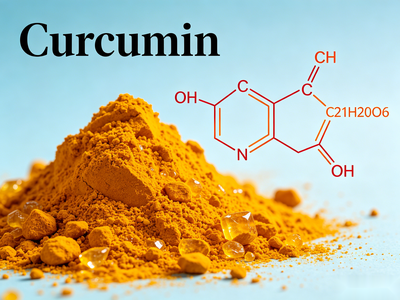
Curcumin is the most researched active compound in turmeric. More precisely, what we call “curcumin” in manufacturing is actually a group of compounds called curcuminoids:
-
Curcumin (the main monomer, most bioactive)
-
Demethoxycurcumin
-
Bisdemethoxycurcumin
When a brand asks for “curcumin,” in 95% of cases they want a standardized extract – typically ≥95% total curcuminoids.
What a factory formulator pays attention to:
-
High-potency positioning – You can put “standardized to 95% curcuminoids” or “xxx mg curcumin per serving” right on the label.
-
Clean label claims – Consumers and B2B buyers immediately understand the strength. Much more functional than plain “turmeric root powder.”
-
Much higher cost – Extraction, purification, and crystallization take serious processing. A 95% curcumin extract can cost many times more than turmeric powder.
-
Even stronger color – Concentrated curcumin stains aggressively. It can bleed into capsule shells, tablet coatings, and powder pouch linings if you’re not careful.
-
Higher supplier requirements – You need a detailed COA (Certificate of Analysis) covering total curcuminoids, individual monomer ratios, residual solvents, heavy metals, etc.
-
Best dosage forms – Capsules (hard or soft), tablets, functional powders. Gummies require serious caution (more on that later).
Formulator’s take: When a buyer asks for curcumin, they are not looking for ordinary turmeric powder. They want a concentrated, standardized ingredient.
3. Turmeric vs. Curcumin: The Production Difference That Matters
Here is the quick-reference table our factory team uses when helping brands choose a direction:
| Feature | Turmeric (as a raw material) | Curcumin (as an extract) |
|---|---|---|
| What it is | Turmeric root powder or non‑standardized extract | Purified curcuminoids, typically ≥95% |
| Role in formula | Botanical base, whole‑herb ingredient | Standardized active, potency‑driven |
| Taste & color | Strong herbal taste, deep yellow | Very strong color, much less taste after purification |
| Cost control | Low – good for entry‑level | High – premium positioning required |
| Label positioning | “Turmeric supplement” / “Whole herb” | “Curcumin 95%” / “High‑strength turmeric extract” |
| Best formats | Capsules, powders, gummies, blends | Capsules, tablets, softgels, advanced powders |
| Buyer’s main question | “Is it real turmeric?” | “What is the curcumin content and monomer ratio?” |
4. Why 500 mg of Turmeric Is NOT the Same as 500 mg of Curcumin
This is one of the most common mistakes brands make: looking only at the milligram number, not the ingredient type.
-
500 mg Turmeric Root Powder
→ ~2–5% total curcuminoids = 10–25 mg of curcuminoids. The rest is starch, fiber, volatile oils, etc. -
500 mg Turmeric Extract (non‑standardized)
→ Unknown curcuminoid content. Could be 10%, 20%, or 50%. You cannot assume anything without a COA. -
500 mg Curcumin Extract 95%
→ Total curcuminoids ≥ 475 mg. That’s 20+ times more active compounds than plain root powder.
So what should a brand check before assuming a formula works?
-
Does the label say Turmeric Powder, Turmeric Extract, or Curcumin Extract?
-
Is it standardized? To what percentage?
-
Does the COA support the label claim?
-
What is the actual fill weight per capsule? (Curcumin extract has lower bulk density.)
-
Does the cost per bottle match the ingredient specification?
Real‑world factory experience: We’ve had more than one client bring a competitor label showing “500 mg Turmeric” and ask for an identical “500 mg Curcumin” product at the same price. That is not how the math works. Nail down the ingredient type first.
5. The Bioavailability Problem: Why Cheap Turmeric Products Often Don’t Work
Curcumin has a well‑known challenge: it is extremely water‑insoluble, and oral absorption is very low.
Pharmacokinetic studies show that with plain turmeric powder or unformulated curcumin, less than 1% is absorbed. Most of what you swallow gets metabolized in the gut or eliminated directly.
How do we solve this in a factory setting?
These are the proven formulation strategies available today:
| Strategy | Mechanism | Effect (clinical data) | Best for |
|---|---|---|---|
| + Piperine (black pepper extract) | Inhibits CYP3A4 and UGT – reduces liver & gut metabolism | ~2000% increase in Cmax, ~1540% increase in AUC | Value‑performance; works in most capsules/tablets |
| Lipid‑based carrier (MCT oil, etc.) | Lymphatic absorption – bypasses first‑pass liver metabolism | Significantly improved bioavailability | Softgels, oil‑based liquids |
| Phospholipid complex (Phytosome®‑type) | Phospholipids form a dispersible complex | Several times higher absorption than unformulated curcumin | Premium capsules, tablets |
| Nano‑ / micronized particles | Smaller particle size = larger surface area | Faster dissolution and absorption | Premium liquids, drink powders |
NIH NCCI note: Plain oral turmeric or curcumin and bioavailability‑enhanced formulations are not the same product category.
Factory bottom line: If your turmeric or curcumin product does not include some form of bioavailability enhancement, the end consumer is unlikely to feel a benefit. That is a fast track to poor reviews and no repeat orders.
6. What We Check Before Manufacturing a Turmeric or Curcumin Product
As a factory formulator, when a brand asks us to “make a turmeric product,” we do not just start production. We first verify these 10 things:
-
Raw material name – Turmeric powder? Turmeric extract? Curcumin extract? (Completely different.)
-
Extract ratio (if applicable) – e.g., 10:1, 20:1 extract – what is the actual concentration?
-
Total curcuminoid content by HPLC – plus the ratio of the three monomers (curcumin, demethoxycurcumin, bisdemethoxycurcumin). USP requires curcumin monomer ≥75% of total curcuminoids.
-
Heavy metals – Lead, arsenic, cadmium, mercury (much tighter limits for US/EU).
-
Microbiology – Total plate count, yeast & mold, E. coli, Salmonella.
-
Residual solvents – Ethanol, acetone, ethyl acetate – must meet target market limits.
-
Pesticide residues – Especially for organic or clean‑label products.
-
Color & taste impact – Curcumin stains aggressively. Evaluate capsule shell, tablet coating, and pouch lining compatibility.
-
Fill weight feasibility – Curcumin extract has low bulk density. How much can you actually fit into a size “0” or “00” capsule?
-
Target market compliance – US (FDA dietary supplement), EU (Directive 2002/46/EC), China (GB 2760 / health food). Different rules.
Pro tip: We strongly recommend asking your supplier for a COA that shows the individual monomer ratio (curcumin, demethoxycurcumin, bisdemethoxycurcumin). That ratio affects color, stability, and batch‑to‑batch consistency – and many buyers never check it.
7. Regulations: Different Markets, Different Rules
If you are doing cross‑border OEM, you need to know that turmeric and curcumin are regulated differently in different regions.
United States
-
As a dietary supplement – Regulated by FDA under DSHEA. You can sell it, but you cannot make disease claims.
-
As a food color – Turmeric is an “exempt from certification” color additive – allowed in foods.
European Union
-
As a dietary supplement – Must comply with Directive 2002/46/EC. Daily intake recommendations often suggest ≤200 mg of pure curcuminoids per day for long‑term use.
-
As a food additive (color E100) – Regulated under EC 1333/2008 with defined use levels and categories.
China
-
As a health food ingredient – Turmeric can be used in registered health foods.
-
As a food additive (curcumin) – Must comply with GB 2760. Allowed in seasonings, fried foods, beverages, etc. – specific limits apply.
Important market observation
A published market survey of 125 turmeric products across five countries (Australia, Germany, India, the UK, and the US) found that 34% of products did not label the actual curcuminoid content. Label non‑compliance is a real risk in cross‑border OEM. Address it during formulation, not after production.