

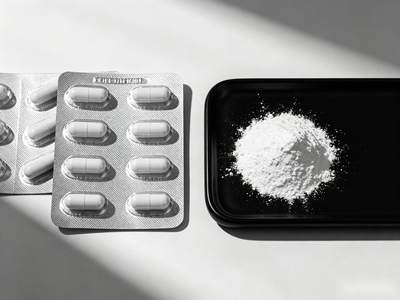
Not pre-mixed blends. Not finished capsules. Just pure, single-ingredient powders in large packs.
A lot of brands initially push back. Bulk powders seem messy. They feel “unfinished.” But once they run the numbers and do a small trial on the line, things click. Bulk powders aren’t a compromise. In our experience, they’re one of the straightest lines to product differentiation and pricing power.
This isn’t a sales pitch. It’s the stuff we’ve learned inside the lab and on the production floor at Jiabei Health. If you’re building a supplement brand, we think it’s worth a read.
1. Why revisit bulk powders? Four reasons that actually matter on the ground
Real formulation freedom
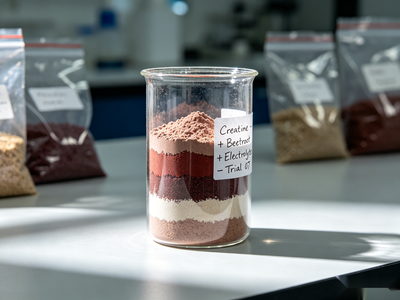
When you work with pre-mixed blends, you inherit someone else’s ratio. Want to create a “creatine + electrolytes + beetroot” performance powder with a specific potassium-to-magnesium ratio? You can only do that cleanly with individual bulk powders. You call the shots on every gram.
Cost transparency no one argues with
Let’s use vitamin C as an example. We’ve done the math with clients more times than we can count. Sourcing pure ascorbic acid powder and packaging it yourself often brings the per-serving raw material cost down to a third or less of what you’d pay for the same potency in capsules. You’re not just paying for active ingredients—you’re stripping away the capsule shell premium, the fillers, and the labor built into pre-finished goods.
The strongest clean-label move you can make
Consumers are more label-literate than ever. They spot “magnesium stearate” and “silicon dioxide” and they ask questions. With a pure bulk powder, your back panel can read one ingredient. That’s as clean as it gets. And contrary to what some think, most powders flow well enough on our equipment without added flow agents once the settings are dialed in.
You keep control of your supply chain
Buying a standard raw material like creatine monohydrate means you’re not locked into one supplier’s formulation schedule or minimums. If a source runs into quality issues or prices spike, you can pivot. That flexibility belongs to your brand, not a middleman.
2. Which bulk powders are putting money in our clients’ pockets right now?
The steady movers
Creatine monohydrate, L-glutamine, ascorbic acid, taurine—these aren’t exciting, but they never stop selling. We see repeat orders for these every week. They’re the products that quietly pay the bills and build trust.
The underrated electrolytes and minerals
Magnesium glycinate, potassium citrate, zinc methionine. We had a European client blend four mineral powders into a “sleep support” drink stick. Same ingredients people were already buying separately, just combined intelligently. The retail price multiplied five times. The perceived value was in the combination, not some exotic new molecule.
Superfoods and adaptogens with legs
Organic maca powder, ashwagandha root powder, chlorella. These come with a caveat we always raise upfront: ask for heavy metal and microbiology reports before you even think about marketing. If the powder isn’t demonstrably clean, your brand story collapses on arrival.
A clear red line
Extremely potent actives—think pure caffeine powder, yohimbine, or similar substances that are dangerous at tiny mismeasured doses—we generally won’t supply to brand clients in pure bulk form. They get pre-diluted master mixes. That’s our safety floor, and honestly, it should be yours too.
3. Selecting a powder supplier: the Jiabei Health five-step filter
When we evaluate raw material suppliers for our own production, here’s what actually happens.
-
Step 1: Dig into the COA’s hidden sections. Beyond assay, we immediately check bulk density (directly impacts filling accuracy), particle size distribution (uniformity of mixing), and loss on drying (clumping risk down the road).
-
Step 2: Run a machine trial, not just a beaker test. We take 50 grams and send it through a small-scale production line. Does it flow smoothly? Does static build up? What’s the weight variation during capsule filling? Some beautiful powders turn into a sticky mess the moment they hit the tooling.
-
Step 3: Demand batch-to-batch consistency data. We ask for three consecutive batch COAs and production summaries. If the active content swings more than 1% batch over batch, the supplier’s process control is shaky, and your product label guarantee is at risk.
-
Step 4: Remote audits with a focus on the unglamorous. On video, we’re not looking at the shiny lobby. We look at dust control in the weighing room, calibration stickers on metal detectors, and pest control logs. That’s where GMP either lives or doesn’t.
-
Step 5: Documentation completeness. For European clients especially, non-GMO statements, allergen declarations, irradiation-free certificates, and vegan/halal certs are practically mandatory now. A supplier that can’t produce a clean document pack isn’t worth a long-term contract, no matter how good the sample looks.
4. From powder to product: lessons we’ve learned the hard way
Taste is the make-or-break for most powders
Amino acids taste bitter. Many minerals have a metallic bite. Just dumping in sucralose doesn’t fix it. We tend to layer natural flavor complexes—citrus extracts with steviol glycosides and a touch of sea salt. One client’s high-dose glutamine powder had terrible repeat purchase rates until we co-processed the powder with microcrystalline cellulose to pre-adsorb the off-notes. After that tweak, reorders jumped about 20%.
Moisture is enemy number one
Bulk powders love to absorb humidity. We recommend clients keep their packaging area below 35% relative humidity and use aluminum foil composite pouches with plenty of silica gel desiccant. For probiotics specifically, we insist on cold blending, and the finished product water activity must sit below 0.15—that’s a non-negotiable for viable cell counts at the end of shelf life.
Blend uniformity equals complaint control
When you’re dispersing a micro-ingredient like vitamin B12 or selenium across a ton of carrier, homogeneity is everything. Our standard practice is stepwise geometric pre-mixing, followed by 9-point sampling from different positions in the blender and checking the RSD. We’ve seen brands discover uneven blending only when a third-party lab tests their finished product. That’s an expensive realization.
Start simple, scale later
Don’t overcomplicate your first move into bulk powders. Launch a pure creatine or pure magnesium glycinate product using our bulk packs and your packaging line. Prove the business model, then we can develop a custom multi-ingredient blend together. Lowest risk, quickest learning curve.
5. Regulatory pitfalls and shipping surprises that catch brands off guard
The regulatory identity trap
Same plant, different country, completely different legal status. Ashwagandha is a classic example: in some EU member states, it falls under Novel Food rules with restricted extract ratios. You need to check compliance against your specific target market before committing. We once had to stop a shipment bound for Spain because the extraction solvent didn’t meet local requirements. Nobody wants that phone call.
The slow-cooker inside a shipping container
A container sitting under summer sun can hit internal temperatures above 70°C (158°F). For probiotics, oil-microencapsulated powders, or any heat-sensitive ingredient, that’s fatal. We strongly advise temperature-controlled containers for sensitive materials, or at minimum, vacuum-barrier bulk packaging and retained samples held for arrival testing. Assume the worst, plan accordingly.
6. Where we’re placing our bets over the next few years
“Mix-your-own” powder kits
Separate bulk powder sachets, one reusable mixing cup, and a dosing scoop. The end user decides what goes into today’s drink based on how they feel. This format is pure gold for content marketing and community engagement.
Radical supply chain transparency
A QR code on the pack linking to the exact batch COA, photos from the farm or facility, even farmer stories. Bulk powders, by their very simplicity, are perfect for this level of traceability.
Co-developed signature powder blends
We’re sharing stability data and sensory evaluation reports with our deep-collaboration brand partners. If we help you build a unique powder that’s hard to reverse-engineer, that’s a moat no competitor can easily cross.
7. We’re talking about more than powder
Bulk powder ingredients aren’t a new concept. But they deserve a much smarter look than they usually get. They can cut raw material costs by 25% or more, give you true formulation ownership, and let you tell a cleaner ingredient story that consumers reward.
If you’ve got a product you’re trying to push forward, let’s have a real conversation. Even if it’s just about fixing a clumping problem or masking a flavor that won’t behave—we’ve spent way too many hours in the lab not to share what we’ve seen.
Technical questions belong between you and the factory floor. We’re here.