

Most people compare collagen capsules and powder by asking one question: which one works better?
That is not really the best place to start.
The bigger difference is usually much more practical. Collagen powder makes it easier to take a higher amount of collagen in one serving. Collagen capsules are easier to carry, easier to swallow with water, and easier to keep in a daily supplement routine.
So the real question is not just “collagen capsules vs powder.”
It is this: how much collagen are you actually getting, and will you take it consistently?
The Short Answer
If you want a higher collagen dose, powder usually makes more sense.
If you want something simple, tasteless, and travel-friendly, capsules may be the better fit.
Neither format is automatically better for everyone. A good collagen powder can be underwhelming if you never use it. A collagen capsule can be convenient, but the serving size may be much lower than you expect.
That is why the label matters more than the front of the bottle.
The Real Difference Is Serving Size
Collagen is not like vitamin D or biotin, where a tiny amount can fit easily into one small capsule. Collagen is usually taken in gram-level servings.
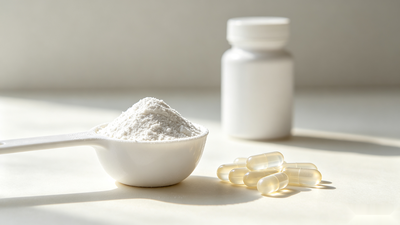
That is where powder has a real advantage.
One scoop of collagen powder can hold several grams of collagen peptides. A capsule cannot. Even large capsules have limited space, and collagen is a bulky ingredient.
This is why many collagen powders are positioned for people who want a more serious daily collagen routine. They can be mixed into coffee, smoothies, oatmeal, protein shakes, or even plain water if the taste is acceptable.
Capsules are different. They are built more for convenience than high dosage.
That does not make capsules useless. It just means you need to check the actual amount per serving. A bottle can say “collagen capsules” on the front and still provide much less collagen than one scoop of powder.
If you only look at the product name, you may miss the most important detail.
Why Capsules Can Be Tricky
Collagen capsules are appealing because they feel easy. No scoop. No mixing. No taste. No powder stuck around the lid.
That convenience is real.
But the tricky part is dosage. If each serving only provides a small amount of collagen, you may need several capsules a day to get close to the amount found in a typical powder serving.
Some people do not mind that. If you already take supplements every morning, adding a few collagen capsules may feel simple.
Other people get tired of it quickly. Taking six capsules a day sounds manageable when you buy the bottle. It feels different after two weeks.
This is why capsules are often a better fit for people who care most about routine and ease, not necessarily the highest collagen intake.
With collagen, the best format is not always the one that looks cleanest on the shelf. It is the one you can use without forcing it.
Does Collagen Powder Absorb Better Than Capsules?
This is where a lot of articles make the topic more confusing than it needs to be.
Powder is not automatically better because it “absorbs faster.” Capsules are not automatically better because they feel more concentrated.
The more important question is whether the product uses hydrolyzed collagen peptides.
Hydrolyzed collagen means the collagen has already been broken down into smaller peptides. Harvard Nutrition Source explains that collagen supplements are commonly sold as collagen peptides or hydrolyzed collagen, which are broken-down forms of collagen.
So if both products use hydrolyzed collagen peptides, the format itself is usually not the biggest issue. Your body still digests the supplement and breaks proteins down into smaller pieces.
What matters more is the full picture:
Is the serving size meaningful?
Is the collagen source clearly listed?
Is the product tested for quality?
Can you take it regularly?
A high-quality capsule can be a good product. A poorly designed powder can still disappoint. Format helps, but it does not replace formula quality.
When Collagen Powder Is the Better Choice
Collagen powder makes the most sense when your goal is a higher daily collagen intake.
It is especially practical if you already have a drink routine. If you make coffee every morning, blend smoothies, use protein shakes, or eat oatmeal, adding collagen powder may not feel like a big extra step.

Powder also gives you more flexibility. You can adjust the serving size more easily, and it is usually easier to compare cost per gram.
The downside is taste and texture. Even “unflavored” collagen powder can have a slight smell, mouthfeel, or aftertaste. Some people do not care. Some people notice it right away.
Powder is also less convenient for travel. You either bring the tub, use single-serve stick packs, or measure it into another container. That is not hard, but it is still more effort than capsules.
So powder is probably the better choice if you want a higher dose and do not mind mixing it into something you already drink or eat.
When Collagen Capsules Are the Better Choice
Collagen capsules make more sense when convenience matters most.
They are simple. You take them with water and move on. There is no taste, no scoop, no shaker, and no need to mix anything into coffee.
That makes capsules a good fit for people who travel often, dislike powder texture, or already have a morning supplement routine.
Capsules may also feel cleaner for people who do not want collagen powder sitting on the kitchen counter. For some users, that matters. A supplement you can keep next to your vitamins may be easier to remember than a tub you have to open and mix every day.
The trade-off is dose.
If you choose capsules, do not assume the serving is equal to powder. Check how much collagen you are getting per serving, not just how many capsules are in the bottle.
Capsules are usually the better choice when the goal is simple daily use. Powder is usually better when the goal is a higher collagen serving.
What to Check Before Buying Either One
Before choosing collagen capsules or powder, turn the product around and read the Supplement Facts panel.
Start with the collagen amount per serving. This is the number that matters most. Do not just look for the word “collagen” on the front label.
Next, check the collagen form. Hydrolyzed collagen peptides are commonly used because they are broken down into smaller peptides.
Then look at the source. Common sources include bovine collagen, marine collagen, chicken collagen, and multi-collagen blends. Marine collagen is common in beauty products, while bovine collagen is widely used in general collagen supplements. If you have allergies, dietary restrictions, or religious requirements, this part matters.
Added ingredients can also change the product positioning. Some collagen supplements include vitamin C, hyaluronic acid, biotin, zinc, or other beauty-support nutrients. These ingredients can make sense, but they do not automatically make the product better. The main formula still has to be solid.
Finally, look for quality signals. Third-party testing, clear sourcing, and transparent labeling are important, especially for animal-derived ingredients. Some research suggests oral hydrolyzed collagen may support skin hydration and elasticity, but it is still smart to keep expectations realistic and choose products carefully. A review published on PubMed Central gives a broader look at the current evidence on hydrolyzed collagen and skin-related outcomes.
So, Which One Should You Choose?
Choose collagen powder if you want a higher collagen dose and you do not mind mixing it into drinks or food.
Choose collagen capsules if you want something easy, tasteless, and portable.
If you hate swallowing pills, powder is probably easier. If you hate mixing powders, capsules are probably easier.
If you want several grams of collagen daily, powder usually gives you a more practical path. If you just want a simple supplement you can take without thinking too much, capsules may fit your life better.
The mistake is choosing based on format alone.
A low-dose capsule and a high-dose powder are not the same thing. But a powder you never use and a capsule you take every day are not the same thing either.
Final Takeaway
Collagen powder usually has the advantage when it comes to dose. Collagen capsules usually have the advantage when it comes to convenience.
The absorption difference is not the main issue if both products use quality hydrolyzed collagen peptides. The more important questions are simple: how much collagen are you getting, what is the source, and can you take it consistently?
For a higher-dose collagen routine, powder is usually the better fit.
For a simple, no-taste, travel-friendly option, capsules may be the smarter choice.
Before you buy either one, check the serving size. That small detail usually tells you more than the front label does.