

Electrolyte powder usually makes more sense when you plan to drink from a bottle during exercise, outdoor activity, or hot weather. Capsules are smaller, easier to carry, and do not leave a sweet or salty taste, but they still need to be taken with water.

Before choosing between electrolyte capsules vs powder, compare one full serving—not one capsule, one scoop, or the number printed on the front of the package. The sodium content, number of capsules required, added ingredients, and the way you will actually use the product matter more than the format alone.
Electrolyte Capsules vs Powder at a Glance
| Factor | Electrolyte capsules | Electrolyte powder |
|---|---|---|
| Water | Taken separately with water | Mixed directly into water |
| Serving size | May require several capsules | More room for mineral ingredients |
| Taste | Does not create a flavored drink | May taste sweet, salty, tart, or flavored |
| Portability | Small and easy to carry | Stick packs travel better than tubs |
| Added ingredients | Usually fewer flavor-related ingredients | May contain sugar, sweeteners, acids, or flavors |
Capsules tend to suit people who want a compact, flavor-free option. Powder works well when drinking water is already part of the activity or when the formula needs more space than capsules can comfortably provide.
Read the Full Serving, Not the Front of the Package
Package size can be misleading.
A bottle may contain 120 capsules, but that does not mean it provides 120 servings. If the directions call for four capsules at a time, the bottle contains only 30 full servings.
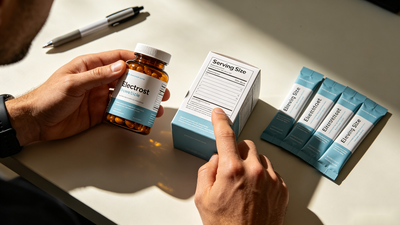
Imagine comparing that bottle with a box containing 30 electrolyte powder sticks. The capsule bottle looks larger and may appear to offer better value, but both products last the same number of days. The next comparison should be the mineral content in each full serving.
This matters most when looking at sodium. Some products emphasize potassium or magnesium on the front label while providing relatively little sodium. That may suit one use case, but it may not suit someone choosing a product for prolonged sweating or hot-weather activity.
Check the Supplement Facts panel for:
-
the number of capsules or scoops in one serving;
-
sodium per full serving;
-
potassium, magnesium, calcium, and chloride;
-
sugar and carbohydrate content;
-
sweeteners, flavors, acids, and colors;
-
the total number of complete servings in the package.
Cost should also be calculated per full serving.
A $24 capsule product with 30 servings costs $0.80 per serving. A $30 powder with 40 servings costs $0.75 per serving. Looking only at the package price would suggest the opposite conclusion.
A Formulation Reality
Mineral ingredients take up physical space.
As the target amounts of sodium, potassium, magnesium, and calcium increase, the number of capsules often increases with them. A formula may look simple on paper but become inconvenient when the user has to swallow four, six, or more capsules.
Powder avoids much of that space limitation. The trade-off moves elsewhere: the minerals must dissolve well and taste acceptable in water.
Sodium can taste salty. Magnesium may add bitterness. Acids and sweeteners are often used to make the drink more enjoyable, but they also change the ingredient list and overall product experience.
This is one reason the dosage form should be judged alongside the actual formula rather than on its own.
Water and Serving Size Are the Main Differences
Powder combines electrolyte intake with fluid intake. The user mixes the serving into water and drinks both together.
Capsules separate those two steps. They deliver the ingredients, but the user still has to drink enough water.
That difference can affect real-world use. Someone carrying an electrolyte drink during a long workout is likely to sip it over time. Someone carrying capsules may take the serving and still forget to drink much water afterward.
Powder is already dispersed before it is consumed, while a capsule must first break apart after swallowing. That does not prove that every powder will produce better results. Serving size, formula composition, fluid intake, and how consistently the product is used are usually more useful points of comparison.
The format also affects how much can reasonably fit into one serving. A powder can hold a larger quantity of minerals without requiring the user to swallow multiple capsules. Capsules remain convenient when the formula fits into a manageable daily count.
When Capsules Are Easier to Use
Capsules work well for travel, commuting, office use, and shorter activities where the user already has access to water.
They take up little space in a backpack or carry-on bag. There is no scoop to measure, powder to spill, or bottle to clean afterward. The serving is also easy to repeat: if the label says three capsules, the amount does not change from day to day.

Taste is another reason people choose capsules.
Electrolyte minerals are not naturally easy to flavor. Powder may taste salty, tart, bitter, or strongly sweetened. Even sugar-free products often contain stevia, sucralose, or another sweetener to make the drink more acceptable.
Someone who prefers plain water may find capsules easier to use consistently.
The main drawback is the number of capsules required. A compact bottle can become less convenient when each serving requires several large capsules. People who have difficulty swallowing pills may also prefer a drink mix.
Capsules are therefore most useful when the formula delivers an appropriate serving without creating an unrealistic pill count.
When Powder Makes More Sense
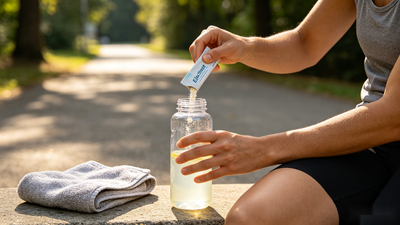
Powder is a natural fit when the user already plans to carry and drink water.
That may include longer gym sessions, running, cycling, hiking, outdoor work, travel in hot climates, or other situations where fluid intake is part of the routine. The drink can be consumed gradually rather than taken all at once.
Powder also gives the formulator more room.
In addition to electrolyte minerals, some products include carbohydrates, vitamins, or other supporting ingredients. These additions may be useful in certain formulas, but they should not distract from the sodium level and serving size the product actually provides.
Flavor can help or hurt a powder.
A pleasant drink may encourage someone to drink more during activity. A powder that tastes too salty or overly sweet may stay unused in the cupboard. In that sense, a bad-tasting powder can be just as inconvenient as a four- or six-capsule serving.
Packaging also changes the experience.
Large tubs may offer a lower packaging cost, but they require a scoop and can absorb moisture after repeated opening. Single-serve sugar-free electrolyte stick packs are easier to carry and keep each serving separate, although they still require water and mixing.
For product development, powder supplement manufacturing allows more room for mineral ingredients, but flavor, solubility, moisture control, and serving size all need to be addressed during formulation.
Which One Should You Choose?
Choose capsules when you want a compact product, dislike flavored drinks, and prefer a fixed serving. They work best when the full formula fits into a reasonable number of capsules and you already have a reliable habit of drinking water.
Choose powder when drinking from a bottle is already part of your activity. Powder also makes more sense when the product needs to deliver a larger mineral serving or when gradual use during exercise is more convenient than swallowing capsules.
The decision often comes down to the inconvenience you are more willing to accept.
Would you rather mix a drink and deal with the flavor, or swallow several capsules and manage your water separately?
There is no universal answer. A powder that tastes good and mixes easily may be used more consistently than capsules. A simple capsule serving may be easier than carrying a tub or shaker bottle.
Compare the full serving, not just the dosage form.
Do You Need Electrolytes Every Day?
Most people do not need a separate electrolyte supplement for ordinary office work, light activity, or routine hydration. Water and a balanced diet are usually the starting point.
Electrolyte products are more commonly used during prolonged exercise, heavy sweating, hot-weather activity, or other situations involving meaningful fluid loss. Harvard’s Nutrition Source notes that sports drinks are generally intended to replace fluids and electrolytes during sustained activity, but they may add unnecessary sugar or calories when used casually.
People with kidney disease, heart conditions, blood pressure concerns, or medications that affect fluid and mineral balance should seek professional medical advice before regularly using concentrated electrolyte products.
Final Takeaway
Electrolyte powder is usually the better fit when drinking water is already part of the activity or when the formula needs more room for minerals. Capsules are easier to carry, have no drink flavor, and provide a fixed serving.
The most useful comparison is not capsules versus powder by itself. It is one complete serving versus another.
Check how many capsules are required, how much sodium the serving provides, what has been added for flavor, and whether the product fits the way you will actually use it.
Frequently Asked Questions
Are electrolyte capsules as effective as powder?
Both formats can provide electrolyte minerals. Compare the full serving, including sodium, other minerals, capsule count, and fluid intake. Powder combines the supplement with water, while capsules require the user to manage water separately.
Do electrolyte capsules need to be taken with water?
Yes. Capsules provide mineral ingredients but do not provide fluid. They should be taken according to the label directions and with an appropriate amount of water.
Is electrolyte powder absorbed faster than capsules?
Powder is already dispersed in water, while capsules must first break apart after swallowing. That difference alone does not mean every powder is more effective. The formula, serving size, fluid intake, and actual use matter more.