

A liquid fish oil supplement is not automatically better than softgels. It may provide a larger serving without requiring several capsules, but taste, measuring accuracy, storage after opening, and EPA and DHA concentration all matter.
Liquid fish oil often appeals to people who dislike swallowing large pills or prefer mixing their supplement with food. Softgels are easier to carry and provide a fixed amount without measuring.
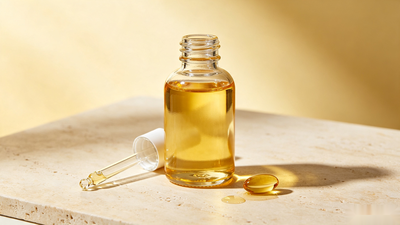
This article focuses on liquid fish oil supplements formulated for human use, not liquid fish oil products made for pets.
What Is Actually in Liquid Fish Oil?
The largest number on the front of the bottle is not always the most useful one.
Fish oil is the total weight of the oil ingredient. EPA and DHA are two specific omega-3 fatty acids found within that oil. A product containing 2,000 mg of fish oil does not necessarily provide 2,000 mg of EPA and DHA.
The most useful numbers are:
-
EPA per serving
-
DHA per serving
-
Serving size
-
Number of servings per bottle
Consider this simplified example:
| Label Item | Amount per Serving |
|---|---|
| Serving size | 1 teaspoon |
| Fish oil | 2,000 mg |
| EPA | 700 mg |
| DHA | 400 mg |
Illustrative example only.
This serving contains 2,000 mg of total fish oil, but 1,100 mg of combined EPA and DHA.
The NIH omega-3 fact sheet notes that fish oil formulations vary considerably. Comparing products by total fish oil weight alone can therefore give a misleading impression of their strength.
The serving size matters as well. A strong-looking number may apply to one teaspoon, half a tablespoon, or another measured volume. Always compare products using the complete daily serving shown on the Supplement Facts panel.
Liquid Fish Oil vs Softgels: Which Is More Practical?
The better format depends less on appearance and more on how the product fits into daily use.
| Factor | Liquid Fish Oil | Fish Oil Softgels |
|---|---|---|
| Serving flexibility | Can be measured by teaspoon or milliliter | Fixed amount per capsule |
| Ease of use | No capsule swallowing required | Simple and portable |
| Taste | Direct taste and possible aftertaste | Usually little taste when swallowed |
| Measuring | Requires a spoon, cup, dropper, or pump | No manual measuring |
| After opening | The full bottle is opened repeatedly | Oil remains divided into sealed capsules |
| Travel | Bottles may leak or be inconvenient | Easier to carry |
| Serving capacity | Often allows more oil in one measured serving | Concentrated formulas may still provide substantial EPA and DHA in fewer capsules |
Liquid fish oil may suit someone who mainly uses the product at home, dislikes swallowing capsules, or wants more flexibility in the serving size.
Softgels are usually more practical for travel, fixed dosing, and users who do not want to taste or measure the oil. Brands comparing formats should look at the full daily serving rather than assuming liquid products are always stronger than omega-3 capsules.
Five Things to Check Before Buying
1. EPA and DHA per Serving
Start with the EPA and DHA amounts, not the marketing language on the front label.
Phrases such as “high strength,” “premium marine oil,” or “2,000 mg fish oil” do not tell you how much EPA and DHA the product provides.
Also check whether the stated amount applies to:
-
One teaspoon
-
Half a teaspoon
-
One tablespoon
-
A specified number of milliliters
Two bottles can contain the same amount of liquid but provide very different numbers of daily servings.
2. Serving Size and Dispensing Method
A liquid supplement needs to be measured consistently.
Common dispensing methods include:
-
Measuring spoons
-
Small dosing cups
-
Marked droppers
-
Pumps
-
Caps with volume markings
A teaspoon may be easy to understand, but oil can drip along the bottle neck or remain on the spoon. A pump may feel cleaner, but its output needs to match the serving stated on the label.
The dispensing method also affects how long the bottle lasts. A 150 mL bottle provides 30 servings at 5 mL per day, but only 15 servings at 10 mL per day.
3. Fish Source and Testing
Claims such as “pure” or “premium” are difficult to evaluate without supporting details.
Useful information may include:
-
Fish species or oil source
-
EPA and DHA specification
-
Heavy-metal and contaminant testing
-
Oxidation or freshness testing
-
Batch or lot information
-
Third-party testing
-
Access to a Certificate of Analysis
Not every technical detail needs to appear on the bottle. A responsible brand may provide additional information on its website or make batch documents available upon request.
4. Flavor and Supporting Ingredients
Liquid fish oil reaches the tongue, so taste is a practical part of the product—not a minor detail.
Lemon, orange, and other flavors are often used to reduce fishy taste and aftertaste. The formula may also include antioxidants, carrier oils, sweeteners, or other supporting ingredients.
Lemon flavor may make the oil easier to take, but it tells you nothing about the EPA or DHA concentration.
Check the full ingredient list, especially when the product is described as:
-
Naturally flavored
-
Sugar-free
-
Preservative-free
-
Extra strength
-
Highly concentrated
These claims describe different parts of the formula and should not be treated as proof of overall quality.
5. Storage After Opening
Liquid fish oil products do not all have the same storage requirements.
Read the label to see whether the product should be:
-
Refrigerated after opening
-
Protected from direct light
-
Kept tightly closed
-
Used within a stated period
-
Shaken before serving
Follow the instructions for the individual product. A formula intended for room-temperature storage may use a different antioxidant system and package from one that requires refrigeration.
Why the Bottle Matters After Opening
A sealed bottle and an opened bottle do not face the same conditions.
Once the product is in use, the cap is opened repeatedly, air enters the container, and small amounts of oil may remain around the neck, cap, pump, or measuring device. Light, heat, and storage habits can add further stress.
This is why the oil and package need to be evaluated together.
The bottle should provide appropriate light protection. The closure should seal properly and remain compatible with the oil. The serving method should dispense a reasonably clean and repeatable amount without creating unnecessary leakage.
Flavor can improve the experience of fresh oil. It cannot correct an oil that has become unstable.
A strong formula in the wrong bottle can still create problems with taste, dosing, leakage, and shelf life.
What Brands Should Confirm Before Development
A liquid fish oil project should not begin with EPA and DHA targets alone.
Brands should confirm:
-
Target EPA and DHA per serving
-
Fish oil source and specification
-
Serving volume
-
Flavor and antioxidant system
-
Bottle, closure, and measuring method
-
Testing requirements
-
After-opening storage and shelf-life expectations
-
Target sales market
These decisions affect one another.
A 5 mL serving may look simple on a specification sheet, but the bottle still needs to deliver that amount cleanly and consistently. A formula that drips down the neck, requires an awkward measuring cup, or develops a stronger aftertaste after opening may be difficult to use every day.
The serving volume, flavor, packaging, and stability plan should be reviewed before the label design and final quotation are confirmed.
The same principle applies when comparing liquid products with softgels. The correct format is the one that can deliver the intended EPA and DHA amount in a practical, stable serving.
The Bottom Line
A liquid fish oil supplement can be a useful alternative to softgels, especially for people who dislike swallowing capsules or prefer a measured serving.
Compare EPA and DHA per full serving, not total fish oil weight alone. Check the measuring method, fish source, testing information, flavor system, bottle design, and storage instructions after opening.
Liquid fish oil offers flexibility. Softgels offer portability and fixed dosing. Neither format is automatically better.
Frequently Asked Questions
How do I compare two liquid fish oil products?
Compare the EPA and DHA provided in the complete daily serving. Then check the serving volume, number of servings per bottle, fish source, testing information, added ingredients, and after-opening storage requirements.
Does liquid fish oil need to be refrigerated?
Not always. Some products require refrigeration after opening, while others are designed for different storage conditions. Follow the instructions on the individual product label rather than applying one rule to every liquid fish oil supplement.